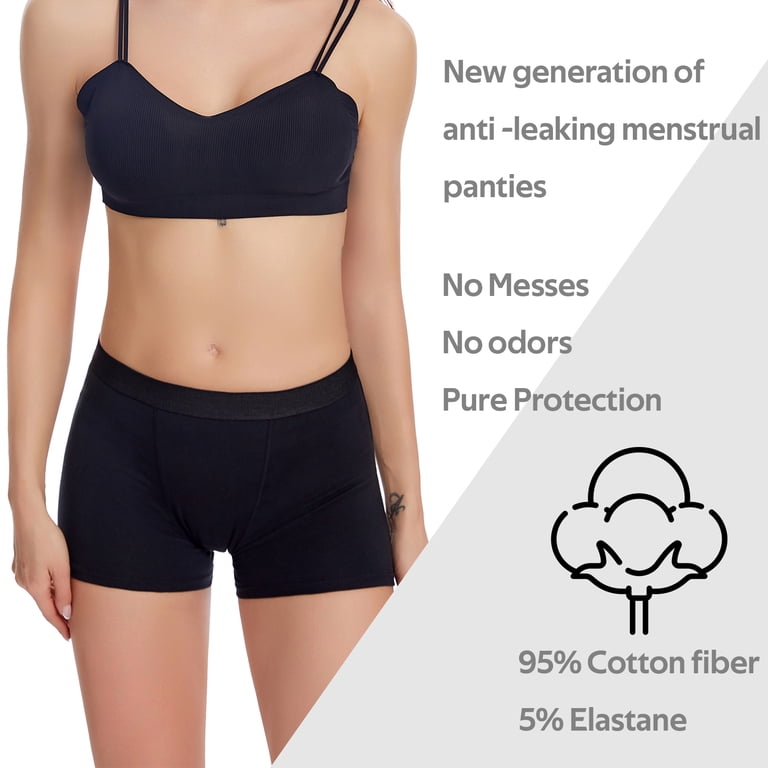
Yes, period swimwear can be worth buying for a beach trip, especially for light-to-moderate flow, spotting, or backup protection. The FDA advises changing tampons every 4–8 hours, while period swimwear removes the need for insertion and can cover the time spent walking, sunbathing, eating, or moving between the beach and hotel. A normal menstrual cycle can range from about 21 to 35 days in adults, so travel dates often overlap with bleeding unexpectedly. Period swimwear works best when its absorbency rating, fit, drying time, and care requirements match your flow rather than when it is treated as a universal replacement for other period products.
Period swimwear is built differently from an ordinary bikini bottom. Most designs use a moisture-moving top layer, an absorbent middle layer, a leak-resistant membrane, and standard stretch swim fabric outside. That layered construction is designed to manage menstrual fluid after leaving the water without creating the bulk of a disposable pad, which matters during a beach day that may last 6–8 hours.
The amount it can hold varies widely because there is no single international absorbency standard for period swimwear. One brand may label a garment “light,” another may compare capacity with 1–3 tampons, and another may describe it only as backup protection, so two products carrying similar marketing language may perform very differently.
That difference makes flow level more important than the words printed on the package.
| Use case | Period swimwear alone | Period swimwear + internal product |
|---|---|---|
| Spotting | Usually suitable | Usually unnecessary |
| Light flow | Often suitable | Optional |
| Moderate flow | Depends on stated absorbency | Often more practical |
| Heavy flow | Often limited alone | Commonly more suitable |
| Long beach day | Depends on change access | Gives extra backup |
A normal period commonly lasts up to about 7 days, and flow is not equal on every day. Someone may have heavier bleeding on day 2 and very light flow on day 5, so one swimsuit may be suitable later in the cycle but not earlier.
That changing flow pattern also explains why period swimwear is often most useful as part of a mixed routine rather than as the only product packed for a trip.
Tampons remain practical for swimming because they are internal and are not affected by seawater in the same way an external pad is. FDA guidance says tampons should be changed every 4–8 hours and the lowest suitable absorbency should be used, so a full beach day can still require one or more bathroom visits even when the tampon itself is working well.
Period swimwear can reduce concern about small leaks before a scheduled change. It can also cover spotting while walking back from the water, sitting in a beach café, or changing clothes, which is where ordinary swimwear offers no absorbent protection.
For people who prefer external products, the comparison is even more noticeable.
A disposable sanitary pad is made to absorb liquid, so it can quickly become saturated with pool or seawater. Period swimwear uses fabrics intended for swimming and places the absorbent section inside a structured gusset, making it much better suited to repeated movement between dry land and water.
People who already wear leak proof underwear may find the transition familiar, although period underwear and period swimwear should not be treated as interchangeable products. Swimwear needs to resist unnecessary water uptake and dry faster after leaving the pool or ocean.
Drying time matters more on holiday than it does at home.
A traveler who wears one pair from 9 a.m. until 3 p.m., hand-washes it at the hotel, and expects to wear it again the next morning may find that humid coastal weather slows drying. Packing 2–3 pairs gives enough rotation for one pair to be worn, one to be drying, and one to remain clean.
A reusable swimsuit only works well when there is enough time, clean water, and airflow to wash and dry it properly.
That practical issue becomes more important on trips involving several hotels, boat transfers, hostels, or overnight travel. A product that needs 12–24 hours to become fully dry may be less convenient than disposable options when the itinerary changes every day.
Care instructions also affect useful life.
Many period swimwear manufacturers recommend cool or cold washing, mild detergent, and air drying. Fabric softener and high heat are often discouraged because repeated exposure can affect technical fibers, elastic, or water-resistant layers, so care labels should be followed rather than applying one washing routine to every brand.
Fit has just as much influence on performance as fabric.
A swimsuit that gaps around the legs can allow fluid to move outside the absorbent area, while one that is too tight may dig into the skin and become uncomfortable after several hours. Buying a smaller size to make the suit feel “safer” is not a reliable way to reduce leakage.
Measurements are more useful than the size printed on the label. A 2024 medium from one brand may fit like another company’s small because swimwear grading, rise, rear coverage, and elastic tension are not standardized across retailers.
That becomes especially noticeable with low-cut bikini bottoms.
Minimal styles leave less room for a wide absorbent gusset, while full briefs, high-waisted bottoms, and boy-short shapes can provide more fabric around the crotch and rear. More coverage does not automatically provide higher absorbency, but it can make the garment feel more secure during walking, paddleboarding, beach volleyball, or sitting for long periods.
Dark colors can also be practical for travelers worried about visible spotting, although color has no effect on actual absorbency.
The next issue is how long the swimsuit can be worn.
There is no medically accepted universal “8-hour rule” for period swimwear because capacity depends on the garment, menstrual flow, time in water, and how much fluid it has already absorbed. Manufacturer instructions are therefore more useful than a fixed number copied from another product category.
If a swimsuit is rated only for light flow, wearing it through a heavy-flow afternoon simply because it felt dry earlier is not a good test of performance.
A simple pre-trip trial is safer than learning its limits on holiday.
Wear the swimsuit locally on a lighter day for 1–2 hours first. Check the leg openings, gusset position, comfort while sitting, and how the fabric feels after swimming; then increase wear time only if the product remains comfortable and the absorbent area is handling your flow.
A second test can focus on drying. Hand-wash it using the same method you expect to use while traveling and record whether it dries overnight in 8, 12, or 24 hours.
That small test also helps decide how many pairs to pack.
For a 5-day beach trip overlapping with 3 period days, two pairs may be enough if the climate is dry and laundry access is easy. Three pairs are more practical when humidity is high, the beach schedule starts early, or the swimsuit is being used for both swimming and several hours of dry wear.
Price should be judged by expected use rather than purchase price alone.
If a period swimsuit costs $45 and is worn 30 times across two summers, the purchase cost is about $1.50 per wear before washing expenses. If it is bought for one vacation and used twice, the cost is $22.50 per wear, which makes the same product look very different financially.
Reusable use also reduces reliance on disposable products during the trip, but it does not remove the need to carry backups.
A person with heavier flow may still need tampons, a menstrual cup, or another preferred product. Someone with light spotting may be comfortable using period swimwear alone, especially during short swims followed by lunch, sightseeing, or time at a resort.
Travel setting changes the answer as much as flow level.
A resort with private bathrooms every few minutes offers frequent opportunities to change products. A 4-hour boat excursion, remote beach, or coastal hike gives fewer opportunities, so built-in backup protection can be more useful even for someone who normally manages periods easily at home.
Period swimwear is usually most useful during the hours around swimming, not only during the minutes spent in the water.
A typical beach visit may include 30 minutes of swimming but another 3–5 hours of walking, sunbathing, eating, driving, or waiting for transport. Menstrual protection is still needed during all of that dry time.
There are also situations where buying it makes little sense.
Someone who already uses a menstrual cup comfortably, has predictable flow, and has easy bathroom access may gain little from another specialist garment. The same applies to travelers who rarely swim during their period or who would struggle to wash and dry reusable swimwear during the trip.
Heavy flow deserves more caution because marketing terms can overstate how universal a product is.
A swimsuit described as “period-proof” is not automatically suitable for every flow level. Check the stated absorbency, whether the maker recommends standalone or backup use, and whether the rating refers to dry wear, swimming, or both.
The best purchase is therefore based on four measurable questions: how heavy the flow is, how many hours the swimsuit will be worn, how quickly it can be washed and dried, and whether another product will be used with it.
For light flow, spotting, or backup coverage, period swimwear can remove several bathroom changes from a 6–8 hour beach day. For heavier bleeding, pairing it with a tampon or menstrual cup is usually more practical than expecting the swimsuit to handle the entire day alone.
Buy it for the level of protection it actually provides, not for the promise suggested by the product name.