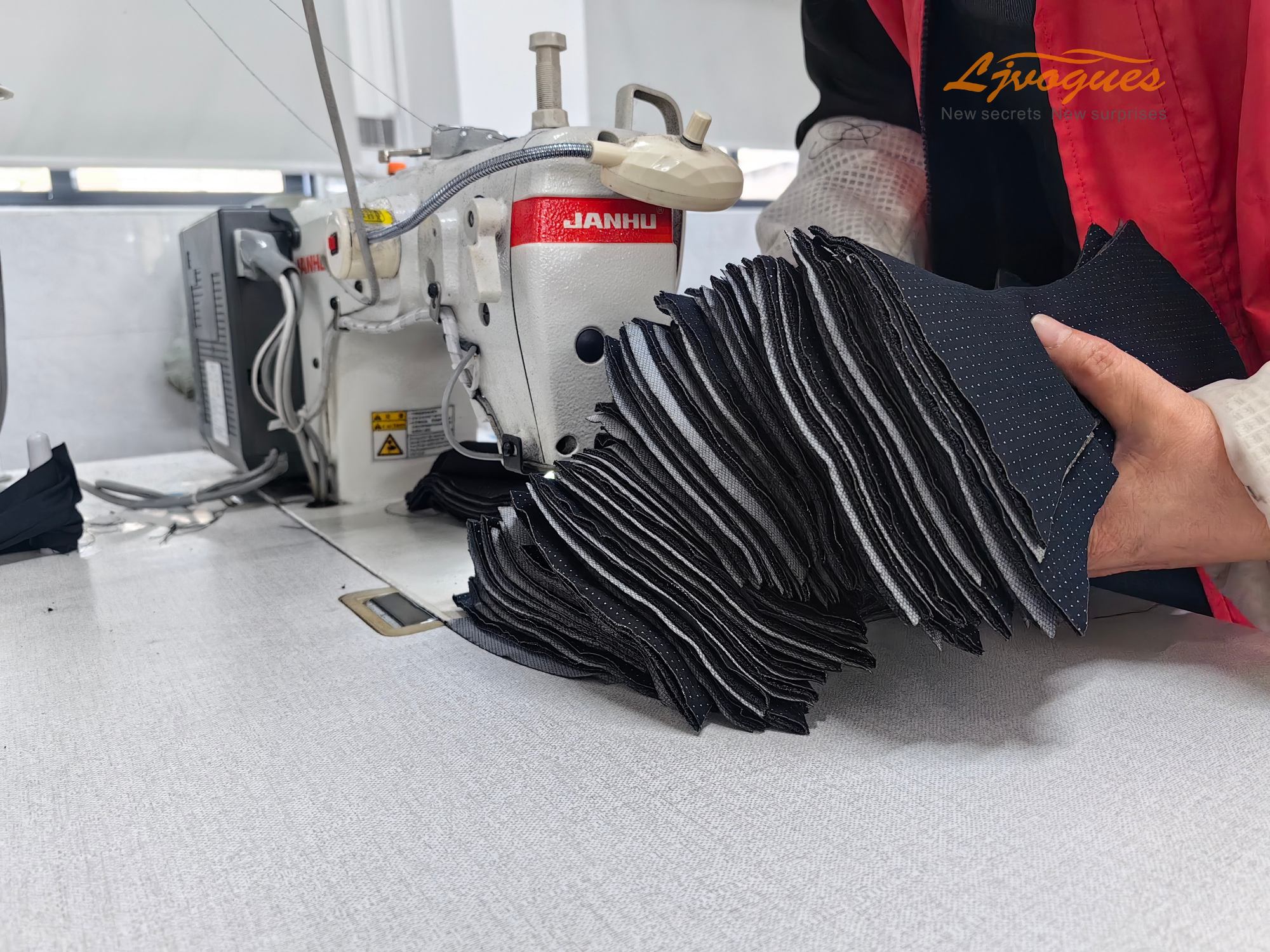
A reliable private label period underwear factory like Ljvogues should prove repeatable performance, not just show attractive samples. Buyers should verify fabric composition, GSM tolerance, shrinkage, gusset dimensions, absorbency method, wash durability, chemical testing, AQL inspection, batch traceability, MOQ, and monthly capacity before issuing a purchase order. In 2026, ISO 2859-1 introduced the third edition of its AQL-based sampling standard, while OEKO-TEX® STANDARD 100 continues to test textile components against more than 1,000 harmful substances. A factory should also reproduce the approved sample across 1,000, 5,000, or 20,000 units without unapproved material or construction changes.
Period underwear is harder to manufacture consistently than standard briefs because one garment may combine four or more materials with very different properties. The body fabric must stretch and recover, the skin-contact layer must move liquid away from the body, the absorbent section must hold liquid, and the barrier layer must resist transfer to clothing.
That construction makes material specifications the first useful factory check. A sourcing sheet should record fiber percentages, finished GSM, usable width, stretch in both directions, recovery, shrinkage, color reference, membrane type, supplier code, lot number, and approved tolerance rather than descriptions such as “soft cotton” or “high absorbency fabric.”
| Item to control | Practical purchasing specification |
|---|---|
| Body fabric | Fiber %, GSM, stretch %, shrinkage %, color standard |
| Gusset top layer | Fiber %, wicking method, GSM, hand feel |
| Absorbent layer | Material, weight, thickness, liquid test method |
| Barrier layer | Membrane type, lamination method, wash condition |
| Elastic | Width, elongation %, recovery, latex requirement |
| Finished garment | Measurement tolerance, stitching, labeling, packing |
A buyer may, for example, approve a 190 GSM body fabric with a ±5% internal tolerance rather than allowing the mill to supply anything described as approximately 190 GSM. The same approach should apply to stretch and shrinkage because a 3% dimensional change is already visible on close-fitting underwear.
Different materials also shrink at different rates, so the factory should test them before bulk cutting. If a body fabric loses 2% in width while a gusset component loses 6%, repeated washing can create puckering, shortened gussets, distorted leg openings, or tension through the crotch area.
An approved fabric name is not enough. The production lot should match the approved composition, weight, finish, color, stretch behavior, and supplier reference.
Material control then leads to functional testing because absorbency claims cannot be assessed from fabric specifications alone. Terms such as “light,” “medium,” “heavy,” and “overnight” do not have one universal textile-industry measurement, so the buyer and factory need a written test method.
For a claimed 30 mL capacity, for example, the protocol should state how the liquid is applied, the application rate, test area, waiting time, pressure, failure point, and whether the sample is new or washed. Testing 3 specimens from one development sample gives much less information than testing several pieces across different production lots.
Wash conditioning matters because period underwear is designed for repeated use. A useful development program can compare samples at 0, 10, 25, and 50 wash cycles, then record changes in absorbency, leakage, delamination, elastic recovery, seam condition, surface pilling, and dimensional stability.
Barrier performance deserves separate control. A laminated membrane can look normal while small needle holes, excessive heat, poor bonding, cutting damage, or incorrect seam placement reduce leakage resistance, so sewing specifications should define where needles may enter the protected area and how much seam allowance is permitted.
Factories should also document lamination batches and storage conditions. If a buyer approves one membrane in 2026, replacing it with another film of similar thickness should require written approval because polymer composition, bonding chemistry, stretch, hand feel, and laundering performance can differ even when both materials appear visually similar.
Once construction is stable, the next check is whether the sample room can transfer the same specifications to bulk production. Many sourcing problems appear between the pre-production sample and the first 500 units because samples may be made by senior technicians while bulk garments move through normal sewing lines.
The approved pre-production sample should therefore be linked to a dated tech pack, bill of materials, measurement chart, stitching details, artwork files, label position, packaging instructions, and material reference numbers. Version 3 should not quietly become Version 4 after cutting has started.
A size specification also needs tolerances rather than nominal measurements alone. A waist measurement of 70 cm is incomplete information; the factory needs an accepted range, such as 69–71 cm if a ±1 cm tolerance has been approved for that point of measurement.
Measurement checks should happen during production, not only when cartons are sealed. If 20 pieces from an early sewing batch show the same out-of-tolerance leg opening, correcting the sewing setting is cheaper than finding the same error across 5,000 finished garments.
Inspection should then move from individual measurements to lot-level quality control. ISO 2859-1:2026, published as the third edition in January 2026, provides AQL-indexed sampling schemes for lot-by-lot inspection and replaces the 1999 edition.
AQL values are purchasing choices rather than universal pass levels for period underwear. A buyer might specify 0 for critical defects and use different limits such as AQL 1.0, 2.5, or 4.0 for other defect categories, while the inspection plan determines the actual sample size and acceptance number.
For this product category, defect lists should include more than appearance:
-
incorrect gusset position or length;
-
open seams or skipped stitches;
-
damaged barrier material;
-
wrong absorbent construction;
-
twisted or uneven elastic;
-
measurement outside tolerance;
-
stains, contamination, or oil marks;
-
incorrect fiber, care, size, or brand label;
-
mixed colors or sizes inside cartons.
A 5,000-piece order should not be accepted from 10 handpicked garments supplied by the sewing manager. Random sampling, carton selection, size distribution, defect classification, and inspection records should be agreed before shipment, with failed lots requiring rework and reinspection rather than informal approval.
Chemical control comes next because the garment remains in direct contact with skin. OEKO-TEX® STANDARD 100 uses four product classes, and Product Class 2 covers products with direct skin contact, including underwear; its testing list covers more than 1,000 potentially harmful substances and is reviewed at least annually.
The 2025 STANDARD 100 documentation also includes restrictions covering PFAS groups, with listed limits such as 25 μg/kg for PFOA and salts in applicable product classes. Buyers should verify the certificate number, holder, product scope, expiry date, and whether the actual fabric or finished garment falls within that certification.
Certification should not replace batch documentation. A supplier may own a valid certificate for one textile family while using a different mill, finish, membrane, elastic, print, or dye lot for the order being discussed.
Organic claims require the same level of precision. GOTS Version 8.0 states that the “Organic” label grade requires at least 95% certified fiber content, while the “Made with organic materials” grade requires at least 70%, excluding accessories under the standard’s calculation rules.
A factory offering organic cotton should therefore identify whether the claim covers only the cotton fiber, the fabric, or the certified manufacturing chain. Purchase documents should use wording supported by the actual certification scope rather than treating every garment containing some organic cotton as equivalent.
Regulatory labeling also needs attention before packing. In the United States, the FTC Care Labeling Rule under 16 CFR Part 423 requires covered manufacturers and importers to provide regular care instructions and to have a reasonable basis for those instructions before sale.
That requirement connects directly to wash testing. A care label stating “machine wash” should reflect how the actual garment, elastic, membrane, print, and absorbent construction behave under the recommended process instead of copying instructions from a standard underwear style.
Factory management systems provide another useful reference point, but certificates need context. ISO 9001:2015 remains published while a new 2026 edition is under publication; ISO reports more than 1 million ISO 9001 certificates across 189 countries.
A buyer should still ask for production records: incoming-fabric inspection, cutting reports, inline QC sheets, needle-control records, final inspection reports, rejected-piece records, and corrective-action documents. A framed certificate on the wall does not show whether a specific 8,000-piece order was controlled properly.
Production capacity should be checked with the same numerical approach. “Large factory” tells very little; ask how many sewing lines can make multilayer period underwear, the daily output per trained line, current utilization, working days per month, and which operations are outsourced.
If one trained line produces 800 acceptable pieces per day and the order contains 16,000 pieces, sewing alone represents about 20 line-days before allowing time for material preparation, finishing, inspection, packing, rework, or public holidays. A promised 7-day production schedule would require additional qualified capacity.
MOQ should also be calculated at SKU level. A range with 5 sizes, 4 colors, and 2 absorbency constructions creates 40 SKUs; a 500-piece MOQ per SKU would require 20,000 pieces, while a 500-piece MOQ per color or style creates a very different inventory commitment.
Pricing needs the same detail. A usable quotation should separate or clearly include body fabric, functional gusset materials, elastic, thread, labels, printing, packaging, testing, tooling, carton packing, and agreed Incoterm because a $0.20 difference can come from material substitution rather than manufacturing efficiency.
Before a larger order, compare at least 2 or 3 production samples from separate dates rather than relying on one showroom piece. Measure them, wash them under the proposed care method, inspect the gusset construction, compare fabric weights, and keep one signed reference sample with the final specification.
Supplier approval can then be recorded with a simple scorecard rather than an impression from sales communication:
| Factory check | Suggested weight |
|---|---|
| Functional product testing | 25% |
| Material control and traceability | 20% |
| Bulk quality system | 20% |
| Compliance documentation | 15% |
| Capacity and delivery records | 10% |
| Development communication | 5% |
| Commercial terms | 5% |
A supplier scoring 90% because of complete records, stable bulk samples, verified materials, and repeatable testing offers more usable information than one scoring well only on price. Keep purchase approval tied to measurable specifications, recent certificates, test records, approved samples, and production-lot documentation.