Imagine a standard PCB as a crisscrossing network of ordinary roads, while a special-type PCB is a multi-layered, three-dimensional transportation hub bearing the weight of extreme traffic flow and speed. The core difference lies first and foremost in breakthroughs in materials science. Standard PCBs typically use FR-4 epoxy glass cloth substrates with a dielectric constant of approximately 4.5, while high-frequency special-type PCBs may utilize Rogers RO4350B material, with a stable dielectric constant of 3.66±0.05, reducing signal loss by more than 30% at 10GHz. For example, in 5G millimeter-wave antenna arrays, special-type PCBs made with fluorocarbon resin substrates have a dielectric loss tangent as low as 0.001, improving signal transmission efficiency by over 25%, far exceeding the capabilities of standard materials. Flexible circuit boards, as a representative of special-type PCBs, use polyimide substrates, can be bent more than 50,000 times, and operate over a wide temperature range of -200°C to +300°C, meeting the miniaturization space-saving requirements of wearable devices, which can achieve up to 50% reduction.
In terms of design complexity and manufacturing processes, Special-Type PCBs push physical limits to new heights. Standard PCBs typically have linewidths/spacings of 0.15 mm or more, while packaging substrates for high-performance computing chips can boast linewidths of an astonishing 15 micrometers, increasing wiring density by nearly 10 times. Through any layer high-density interconnect technology, Special-Type PCBs can achieve stack-up structures of over 20 layers, with interlayer alignment accuracy controlled within ±8 micrometers. Apple uses such substrates in its iPhone processor packaging, interconnecting over 12 billion transistors in an area of less than 100 square millimeters, increasing signal transmission speed by 40% and reducing power consumption by 15%. In contrast, the manufacturing cycle for a standard PCB might only take 5 days, but a Special-Type PCB involving embedded resistors and capacitors can have a development and production cycle of up to 60 days, costing 200% to 500% more.
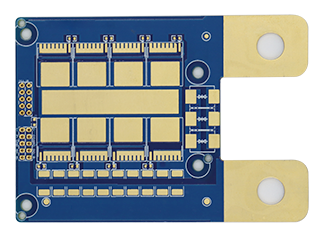 Specialized performance parameters are the core value of Special-Type PCBs. For aerospace applications, Special-Type PCBs with ceramic substrates boast a thermal conductivity exceeding 150 W/(m·K), more than 75 times that of standard FR-4 material. This reduces the junction temperature of power modules by 30°C, significantly improving system reliability. In medical CT scanner detector boards, with over 5000 signal acquisition channels, impedance consistency requirements demand tolerances strictly controlled within ±5%. Any deviation can lead to a more than 20% decrease in image resolution. Tesla, in its next-generation Autopilot module, employs special PCBs with integrated heat-dissipating metal substrates, improving the heat dissipation efficiency of power devices by 50%. This allows computing units to operate continuously at full load at an ambient temperature of 105°C, extending their lifespan to 15 years.
Ultimately, choosing a Special-Type PCB solution essentially means paying a technological premium for extreme environments and peak performance. Standard PCBs may meet the needs of 80% of consumer electronics applications, with a unit area cost of approximately $0.50. However, a special-type RF PCB used in low-Earth orbit satellite communication payloads can cost up to 100 times more than a standard one, due to the need to withstand extreme temperature cycling from -150°C to +120°C and total space radiation doses of up to 100 krad. But this investment yields irreplaceable performance: a 10 Gbps increase in data rate and a bit error rate below 10^-12. Therefore, when your project faces challenges such as frequencies exceeding 28 GHz, power densities greater than 5 W/cm², or the need to operate for 10,000 hours at 90% humidity, special-type PCBs are no longer just an option, but the only reliable technological bridge to success.
Specialized performance parameters are the core value of Special-Type PCBs. For aerospace applications, Special-Type PCBs with ceramic substrates boast a thermal conductivity exceeding 150 W/(m·K), more than 75 times that of standard FR-4 material. This reduces the junction temperature of power modules by 30°C, significantly improving system reliability. In medical CT scanner detector boards, with over 5000 signal acquisition channels, impedance consistency requirements demand tolerances strictly controlled within ±5%. Any deviation can lead to a more than 20% decrease in image resolution. Tesla, in its next-generation Autopilot module, employs special PCBs with integrated heat-dissipating metal substrates, improving the heat dissipation efficiency of power devices by 50%. This allows computing units to operate continuously at full load at an ambient temperature of 105°C, extending their lifespan to 15 years.
Ultimately, choosing a Special-Type PCB solution essentially means paying a technological premium for extreme environments and peak performance. Standard PCBs may meet the needs of 80% of consumer electronics applications, with a unit area cost of approximately $0.50. However, a special-type RF PCB used in low-Earth orbit satellite communication payloads can cost up to 100 times more than a standard one, due to the need to withstand extreme temperature cycling from -150°C to +120°C and total space radiation doses of up to 100 krad. But this investment yields irreplaceable performance: a 10 Gbps increase in data rate and a bit error rate below 10^-12. Therefore, when your project faces challenges such as frequencies exceeding 28 GHz, power densities greater than 5 W/cm², or the need to operate for 10,000 hours at 90% humidity, special-type PCBs are no longer just an option, but the only reliable technological bridge to success.
Specialized performance parameters are the core value of Special-Type PCBs. For aerospace applications, Special-Type PCBs with ceramic substrates boast a thermal conductivity exceeding 150 W/(m·K), more than 75 times that of standard FR-4 material. This reduces the junction temperature of power modules by 30°C, significantly improving system reliability. In medical CT scanner detector boards, with over 5000 signal acquisition channels, impedance consistency requirements demand tolerances strictly controlled within ±5%. Any deviation can lead to a more than 20% decrease in image resolution. Tesla, in its next-generation Autopilot module, employs special PCBs with integrated heat-dissipating metal substrates, improving the heat dissipation efficiency of power devices by 50%. This allows computing units to operate continuously at full load at an ambient temperature of 105°C, extending their lifespan to 15 years.
Ultimately, choosing a Special-Type PCB solution essentially means paying a technological premium for extreme environments and peak performance. Standard PCBs may meet the needs of 80% of consumer electronics applications, with a unit area cost of approximately $0.50. However, a special-type RF PCB used in low-Earth orbit satellite communication payloads can cost up to 100 times more than a standard one, due to the need to withstand extreme temperature cycling from -150°C to +120°C and total space radiation doses of up to 100 krad. But this investment yields irreplaceable performance: a 10 Gbps increase in data rate and a bit error rate below 10^-12. Therefore, when your project faces challenges such as frequencies exceeding 28 GHz, power densities greater than 5 W/cm², or the need to operate for 10,000 hours at 90% humidity, special-type PCBs are no longer just an option, but the only reliable technological bridge to success.